When I applied to universities, I was given a truly incredible prompt by the University of Chicago. They are quite famous for their "out there" essay questions, and this year was no different. While, they had a number of options to choose from, the one I chose goes as follows:
In Homer’s Iliad, Helen had a “face that launched a thousand ships.” A millihelen, then, measures the beauty needed to launch one ship. The Sagan unit is used to denote any large quantity (in place of “billions and billions”). A New York Minute measures the period of time between a traffic light turning green and the cab behind you honking. Invent a new unit of measurement. How is it derived? How is it used? What are its equivalents?
What follows is by no means a rigorous analysis of English, but rather a way to spend far too much time to quantify something both unquantifiable and arguably nonexistent. It may well be my magnum opus.
Defenestrate: verb, the act of throwing (something or someone) out of a window.
I present to you this word as the epitome of the incredible absurdity of the English language’s vocabulary. While, of course, this is not the only example of a word with little to no practical use, I would argue it is one of the most amusing. The English language has evolved over centuries to create a word for the act of throwing something out of a window, yet we are missing anything in our day-to-day vernacular to monolexically describe the day after tomorrow. This, I argue, is problematic.
In all things that evolve, be it people, viruses, or language, evolution is fickle, and relics of another time are to be expected. English, however, seems to have a particular affinity for confusion and illogicalities. Perhaps this should be unsurprising given its background, which is a mix of romance, Germanic, Norse, and even Indo-Aryan families, but to top off this teetering tower of languages writers like Shakespeare have been able to single-handedly expand English vocabulary with everything from “alligator” to “Xanthippe”. Shakespeare’s contributions may show the pervasiveness of his works and the genius of his mind, but they also reveal the complete lack of standards governing the English language. English is a toddler that chews on everything it finds, and English speakers have given it free rein of the rubbish bin.
To understand the true extent of the, shall we say, interesting examples of existing vocabulary, it is perhaps best to quantify the usefulness or absurdity of a word. For this, I have developed the latest in word-value analysis methodology: the Word Absurdity Index, also referred to as the Defenestration Score (D-Score).
To calculate absurdity the Defenestration Score includes four key elements: how “silly” it sounds, whether it is easily misinterpreted in context, how many ways it can be used, and how commonplace its use. The higher the D-Score, the more empirically absurd the word. Let’s begin with a word’s sound: its phonemic quality. A word’s absurdity can be increased substantially if the actual sound of the word is itself humorous, and according to a paper written by Professor Chris Westbury from the University of Alberta, we can use a calculation of Shannon entropy based on letter frequency to estimate the humour of a word. The equation for this is as follows, with pi being the frequency of a letter in English and i being the number of letters in the word. A higher value of this means the word should sound more amusing.

The next factor is word ambiguity, where a more ambiguous word receives a higher D-Score as its meaning is less clear and its usefulness is consequently lower. This value is based on the definitions of a word, according to WordNet, and is represented in our final equation as q.
Third, a word with many related words is more likely to have numerous genuine use cases, which lowers the D-score. This also uses WordNet, and in the equation, h1 is the number of directly related words, while h2 is the number of words related to everything in h1.

Finally, the most significant component of the D score is a logged average of the word’s usage frequency in print from 1990 to 2019 according to Google NGram viewer, where fi is the use of the word for a year, and y is the total number of years (almost always 29, except for very new words). This gives us a starting point for its absurdity, which is then modified by our three subcomponents.
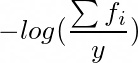
Combining these, we have the full equation for the Defenestration Score/Word Absurdity index. All of these data points on a word come together and spit out a single number that represents a word. Higher is more absurd, lower is more reasonable.

One could argue that this scoring system is entirely subjective and quantifying words into a single number is an impossible task. They could point out that I do not account for every possible metric a word may have. They would be right in saying that the Defenestration Score has no equivalents, no verification, and no real use cases. It does, however, have the uncanny ability to immensely amuse those who see it while they also question why I would ever develop such a measurement. This score will not cause Merriam-Webster to throw out words like “ophiophagus” or “bunchberries”, nor will it perfectly identify the relative usefulness of every English word. With such high scorers as “tizzies”, “antigram”, and “theologizer”, its entertainment value is much greater than its applicability, but this gets at what the Defenestration Score truly is: an in-depth answer to an offhand question about the world.